 Home
Home Trending
 New Release
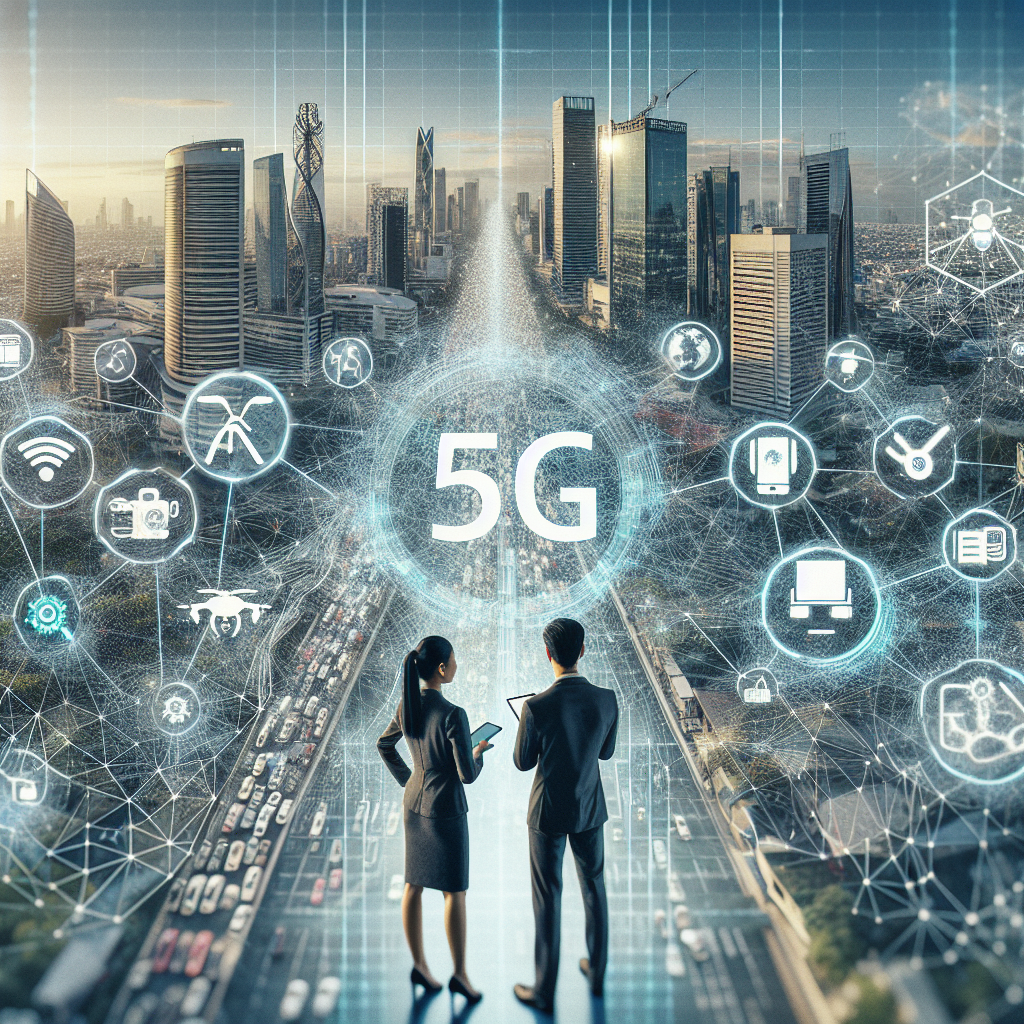
In this episode of Transmissions from Tomorrow, we had the opportunity to sit down with Monika Bajlian, the 5G marketing director, and Fredrik Engströmer, Head of Marketing, 5G Core Business Area Digital Services at Ericsson. They shared valuable insights into the evolution of 5G networks and the potential impact on various industries.
Introducing the Experts
Monika Bajlian
- Responsible for driving Ericsson’s global marketing strategy for 5G
- Background in Network Society Evangelism and research into technology-driven transformation
- Previously the editor of Ericsson’s Mobility Report
- Earned a Master of Science degree in strategy and marketing
Fredrik Engströmer
- Extensive leadership roles at Ericsson in sales, business development, and marketing
- Specializes in 5G core, business cases, and network slicing
- Holds a Master’s of science degree in engineering physics
The Evolution of 5G Networks
Monika highlighted the diverse opportunities that 5G brings, not just for consumers but also for multiple industries. The key technical differences and expectations for 5G include:
- Peak data rates of 10-20 gigabits per second
- Latency of 1-10 milliseconds
- User experience data rate of up to 100 megabits per second
- Spectrum efficiency and mobility improvements
- Resilience and reliability with 5 nines of packets and availability
Fredrik emphasized the importance of low latency for critical use cases such as remote operations in healthcare and construction. With 5G technology, these critical use cases can now be supported with minimal latency, opening up new opportunities for digitalization in various industries.
Commercial Launch of 5G Networks
Monika shared that the first commercial launches of 5G networks are expected later this year, with initial rollouts in the US and Northeast Asia. She also expressed her excitement for the widespread adoption of 5G and the potential for 5G-enabled devices to become more accessible in the near future.
The Future of 5G Use Cases
Monika discussed the four categories of 5G use cases and the potential for operators to tap into new business opportunities. These use cases include:
- Enhanced Mobile broadband
- Fixed wireless access
- Massive IoT for monitoring and tracking
- Critical IoT for low latency and high throughput applications
She also highlighted the need for operators to build competence and develop new business models to address the diverse opportunities presented by 5G.
The Potential Impact of 5G
The Ericsson Mobility Report projects over a billion 5G subscriptions by 2023, with 20% of all mobile traffic expected to be carried by 5G networks. This rapid growth in 5G coverage is driven by consumer expectations of better performance and the potential for 5G to outperform Wi-Fi in both public and home environments.
The Business Potential of 5G
Fredrik delved into the business potential of operators addressing industry digitalization using 5G. He discussed the research conducted on 10 industries and 400 use cases, highlighting the additional 36% revenue growth potential for operators addressing these industries with their telecom solutions embedded.
He also emphasized the high business potential found in the manufacturing and energy utilities industries, with significant revenue growth expected in these sectors.
Network Slicing and Its Value Proposition
Fredrik explained the value proposition of network slicing in the 5G world. He discussed the economical and financial aspects of network slicing, comparing it to the traditional network setup and highlighting the benefits of network slicing in terms of revenue, OPEX, and CAPEX.
Looking to the Future
Monika and Fredrik shared their hopes for the future of 5G networks, focusing on the potential for impactful use cases such as drone delivery for life-saving medical equipment and remote operations in healthcare.
They expressed their aspirations for the widespread deployment of 5G-enabled use cases in commercial settings, driving positive change and innovation across various industries.
Stay tuned for more updates on the future of 5G networks and the digital transformation of telecommunications.
Disclaimer: The transcript has been edited for clarity and conciseness.
